

Converting an Establishment into a Company: The VAT Registration Gap That Can Disrupt Invoicing and Returns
The conversion of an establishment into a company is often managed as a legal and commercial project: a new commercial registration is issued, contracts are updated, and sales and purchases continue. Yet one of the most sensitive transition questions can remain outside the implementation plan: what happens to the VAT registration on the effective transfer date?
The practical problem is rarely caused by a complex transaction. It begins when invoicing, point-of-sale, or accounting systems continue issuing invoices under the former establishment’s VAT number while the activity is now carried on by the company. Sales, purchases, and VAT returns may then be recorded under a tax identity that no longer reflects the person conducting the activity after the conversion.
What does Article 17 regulate?
Article 17 of the Saudi VAT Implementing Regulations governs the full or partial transfer of an economic activity from one person to another for the purpose of continuing that activity. The transfer is not treated as a taxable supply when the statutory conditions are met. In summary, the transferred assets and services must be capable of operating as an independent economic activity, the recipient must immediately use them to conduct the same activity, the recipient must be—or become—a taxable person because of the transfer, and the parties must agree in writing to treat the transaction as a transfer of an economic activity.1 2
A change in legal form does not, by itself, mean that Article 17 automatically applies. The parties, transfer date, assets and services transferred, continuity of the activity, and conversion documents must be assessed against the statutory conditions in each case.
The current provision also imposes a practical notification requirement. The supplier and recipient must notify ZATCA through the designated form no later than the end of the month following the month in which the transfer takes place. The regulation and ZATCA’s guidance identify the required information, including the parties’ names and addresses, their Taxpayer Identification Numbers where applicable, evidence of the recipient’s registration application if not already registered, the transfer date, details of the transferred goods and services, the signed transfer agreement, and any additional information requested by ZATCA.2 3
Article 17 also states that, where the transfer causes the supplier or recipient to be required to register or deregister, ZATCA must be notified within thirty days from the transfer date.2 Businesses should therefore not manage the process solely by reference to the “end of the following month” deadline. The applicable registration or deregistration obligation should be identified, and the process should begin before the conversion becomes effective.
| Regulatory requirement | Practical implication for the conversion |
|---|---|
| Written agreement to transfer the economic activity | Address the VAT treatment in the conversion documents rather than in later correspondence |
| Notification through ZATCA’s designated form | Prepare the notification pack and supporting documents before the transfer date |
| Registration of the recipient where required | Apply for the company’s separate VAT registration and TIN |
| The supplier’s TIN does not transfer | Stop using the former establishment’s VAT number at the appropriate cutover point |
| Transfer and retention of business records | Preserve the documentary chain across pre- and post-transfer periods |
The VAT number does not transfer with the business
This is the point most easily missed: transferring the activity does not transfer the supplier’s Taxpayer Identification Number to the recipient. If the company was not already registered, it must apply for VAT registration and obtain its own TIN before the transfer, as required by the regulation and explained in ZATCA’s official guidance.2 3
Continuing to issue sales invoices in the establishment’s name and VAT number after the company has begun carrying on the activity is therefore more than an administrative discrepancy. Recording the company’s purchases using invoices addressed to the former establishment can also weaken the evidence supporting input VAT deduction. Depending on the facts, the consequences may include invoice and return corrections, challenges to input VAT deduction, reassessment of output VAT or tax due, and penalties where the error results in a violation covered by the VAT Law or Regulations.3 6
This does not mean that every error automatically triggers every consequence. The treatment depends on the effective date, the identities of the supplier and recipient, the validity of the invoices, each party’s registration status, the content of the transfer agreement, and the returns already filed. However, waiting until the discrepancy appears during an audit or deregistration request usually makes the correction more complex and costly.
The common error in four stages
First, the establishment-to-company conversion is completed without defining a VAT cutover date for ending use of the establishment’s TIN and beginning use of the company’s TIN.
Second, invoicing, e-invoicing integration, or point-of-sale systems continue issuing invoices under the former name and VAT number even though the company is conducting the new transactions.
Third, post-conversion purchases are recorded in the company’s books using invoices addressed to the establishment, or the company’s sales are included in the establishment’s VAT return.
Fourth, the conflict is discovered later during invoice-to-return reconciliation, an application to deregister the establishment, or a review of input VAT deduction.
Build a VAT cutover plan before the conversion date
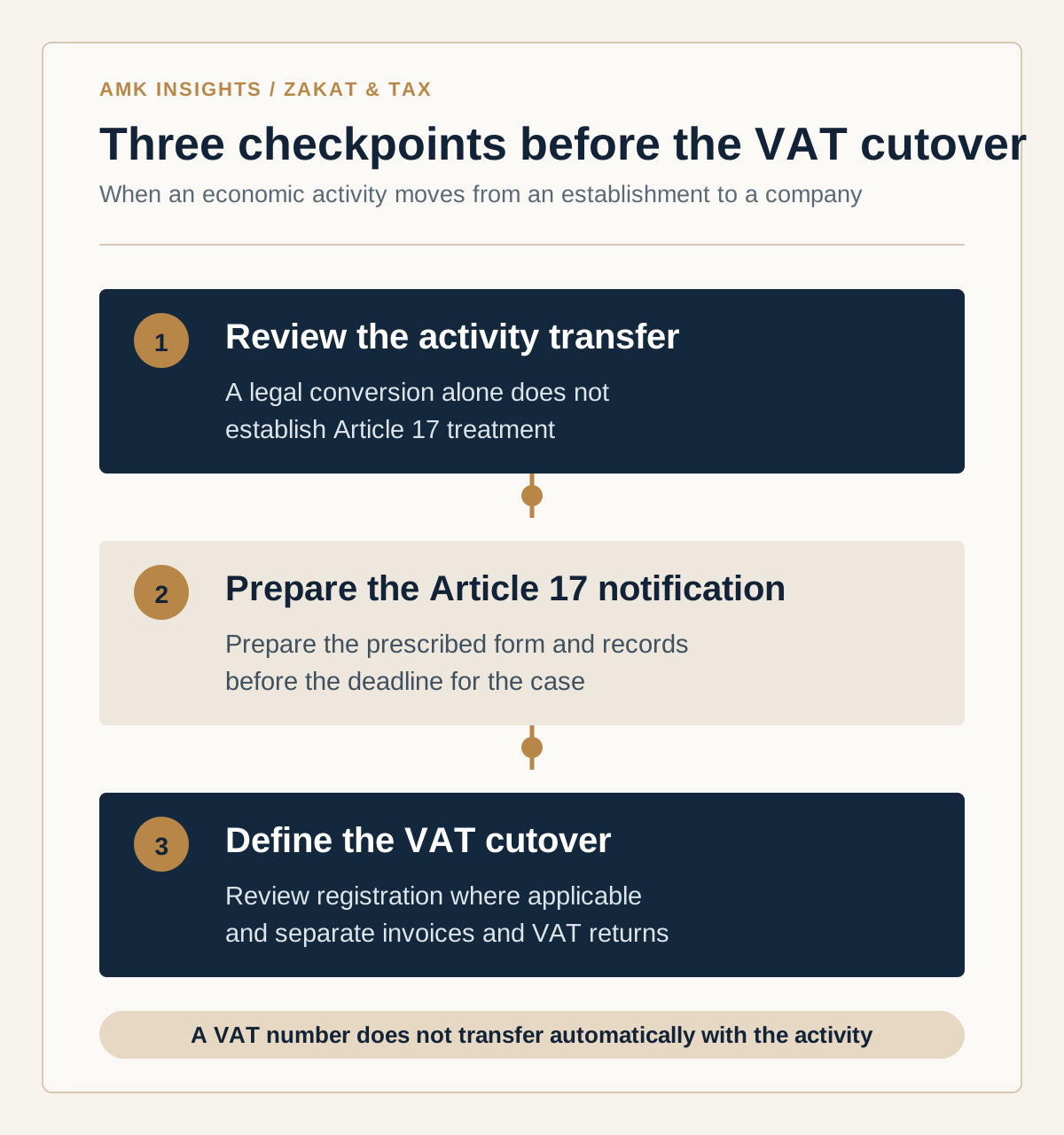
The better response is not a late filing after the problem appears, but a VAT cutover plan that aligns the legal conversion date with registration, invoicing, and VAT-return processes. The plan should identify the transfer date, assess the Article 17 conditions, prepare the written agreement, submit the company’s registration application where required, compile the notification form and supporting documents, and determine the establishment’s final invoice and transaction and the company’s first invoice and transaction.
Implementation should extend to accounting systems, e-invoicing, invoice templates, and customer and supplier master data, supported by a focused review of invoices issued and received around the cutover date. The establishment’s VAT returns should be reconciled, its deregistration requirements should be evaluated if its activity has ceased, and the required business records should be transferred and retained in accordance with the Regulations.2 4 5
How AMK supports the transition
AMK has developed an internal Article 17 working pack that organizes the information required for the notification, the supporting documents, and the transition steps between the two VAT registrations. We use it to help management assess the transfer conditions, prepare the notification documentation, review the company’s VAT-registration readiness, test the invoicing and return cutover, and identify transactions that may require correction before the issue extends across multiple tax periods.
The working pack is an internal organization and review tool designed to support complete and consistent filing. It does not replace ZATCA’s prescribed form or any case-specific requirement imposed by ZATCA.
Conclusion
The VAT transition is not completed merely because the company’s new commercial registration has been issued. The establishment’s TIN does not transfer to the company, and Article 17 links the treatment of the business transfer to defined conditions, notification, evidence, and deadlines. Coordinating registration, invoicing, and return processes before the effective date reduces the risk of disputed documents and the need to reconstruct tax periods later.
If your establishment is preparing to convert into a company—or you have discovered that invoices continued under the former VAT number after the conversion—AMK can review the timeline, supporting documents, and affected returns and help management define an appropriate correction path based on the facts.
Talk to an Expert — Related service: Zakat, Tax & Compliance
This article provides general professional information and is not a tax opinion for a specific case. The appropriate treatment depends on the conversion facts, dates, documents, and ZATCA registration status.